9/8/20

Tips for the Garden - September 2020


The weather has been quite different this year compared to last year’s drought, heat, etc. It was a nice change considering normal summer weather for our area. If you like to garden, now is the time for Fall gardening. Now is also the time to add color into the fall landscape with the cheerful faces of winter hardy pansies and violas, gorgeous garden mums, and unique varieties of ornamental cabbage and kale. Transform the entrance to your home into a welcoming, colorful fall display with plants, cornstalks, ornamental grasses, an assortment of pumpkins and squash, and maybe a scarecrow set on a hay bale.

Don’t forget spring flowering bulbs. Now is the time to get the best selection of varieties and colors. Fall bulb planting varieties include Tulips, Hyacinths, Daffodils and Crocus.  


September is perfect lawn renovation month. Aeration helps control thatch, improves the soil structure, helps create growth pockets for new roots, and opens the way for water and fertilizer to get to the roots of your lawn. Aeration is the process of removing thousands of small cores of soil 1” to 3” in length from your lawn. The holes in the soil created by aeration make perfect pockets for catching fertilizer and water. 

Once aeration is accomplished, it is a perfect time to over seed your lawn. Fescue grass seed blends are most common here in the Mid-Missouri area. Fescue blends take our summer heat and drought conditions better than Bluegrass seed mixes. Fescue lawn mixes tolerate heat, drought and traffic from kids and pets better. Over seed Fescue lawns at a rate of 2-3 lbs per 1,000 sq ft if you have a 50% stand of grass. After seeding, top dress with a starter type fertilizer, and you are ready to enjoy a beautiful green lawn for fall and spring!


The Fall of the year is perfect timing for tree planting. Proper sun exposure, soil moisture, and the available growth space needs to be assessed to help with tree selection. So, plant a tree this fall. You will help the environment, lower your electric bills, and enhance your property value.

Here are a few other quick tips for this month. Begin to adapt your houseplants for winter indoors. Check for pests and treat if necessary. Houseplants should be brought indoors at least one month before the heat is normally turned on. Sow fall vegetable crops through mid September. Harvest herbs now to freeze or dry for winter.  

Stay engaged with nature…
Sandi Hillermann McDonald


7/31/20

Tips for the Garden - August 2020

  Our summer continues with a lot of unknowns and questions still left unanswered. But the garden will welcome your every visit. Enjoy the opening of every new flower and every new bird or butterfly to visit.

Your main tasks for this month begin with the letter W. Weeding and watering. Both tasks are pretty self-explanatory. If you let weeds get ahead of you and they go to seed, you are going to have hundreds more to deal with this fall and next spring. When using herbicides be sure to read and follow all label directions thoroughly. They are written for your protection. Generally, it is best to pull weeds that are growing in and immediately around your desirable plants, and spray those that are “in the open.”

As far as watering goes, August is usually an extremely low moisture month, so slow deep watering at the base of desirable trees and shrubs on a weekly basis is very important. Try to eliminate drought stress on your plants. When the weather is dry, please take care of your desirable plants with slow soaking waterings. If you have questions, do not hesitate to give us a call.

Mowing the lawn is another task that continues in August. Due to the usually hot and dry conditions that are the norm in August, you may be able to space your mowings further apart. It is also beneficial to let the grass grow longer to help shade the roots.

If you are thinking about a new addition to your landscape this fall, now is the time to talk to your favorite landscape designer. Your designer can discuss your needs with you, design the changes or new additions, and get you on the schedule for a fall installation.

If you tried your hand at seasonal vegetable gardening this spring, here are a few ways you can enjoy a fall garden. Carry Tomatoes, Peppers and Basil over in your fall garden. Direct sow Beets, Radishes, Peas, and Spinach now where other spring crops such as Broccoli and Cauliflower have come and gone for this year. It is best to replant nursery starts of Broccoli and Cauliflower, and not sow them from seed this time of year. The possibilities are still quite many, so carry that garden adventure out a little further into the fall. You won’t be disappointed!


See you next month……….in the garden
Sandi Hillermann McDonald

6/25/20

Tips for the Garden - July 2020

      Well summer has come with a vengeance of heat and humidity. This IS Missouri, right? This summer is seeing the opening of outdoor playgrounds, stores, facilities and so much more. Now is the time to gather and celebrate each other and enjoy nature! But please still do it at a safe distance.

     We have all experienced a NEW spring never seen before with this COVID virus. We have learned from it, became more appreciative of our surroundings, and of family and friends. Now let us get back to keeping our little pieces of sanctuary (and sanity) in tack and enjoyable.

      It’s not too late to plant shrubs, perennials and annual flowers, but you will need to give them a little TLC for the summer.Japanese_Beetles (1)

      If Japanese beetles are attacking your plants, you have several options; from trapping (the safest) to spraying them. Japanese beetle traps are readily available and do a fantastic job of eradicating the problem naturally.

      Hot, dry weather is ideal for spider mite development. Damage may be present even before the webs are noticed. With spider mite damage, leaves may be speckled above and yellowed below. Evergreen needles appear dull gray-green to yellow to brown. Spray with permethrin to control this critter.
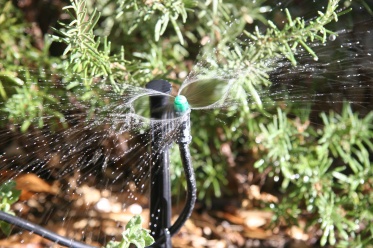
IrrigationDrip-Sprinkle-W       Water conservation is of the utmost importance during our dry summer months. Water where it counts, at the roots, not the leaves. Drip irrigation systems in landscape beds do wonders for water conservation and are easy for the homeowner to install. Trees and shrubs would also benefit from a deep root watering this time of year. You can use a deep root feeder (without the fertilizer) for this purpose. Water plants around the drip line for best success. Doing this every 2-3 weeks is beneficial. When you mow your grass, cut it less frequently and at a higher level. Longer grass blades shade the soil and conserve moisture. Plant drought tolerant, native plants where possible.
Native plants are becoming a true staple in the landscape.Garden_Porch_Hanging_Baskets_PW

      Check your plant containers daily for water. Hanging baskets will need a drink at least once a day, sometimes even twice a day, depending on the weather. Provide water in the garden for birds during dry weather and they will repay you with wonderful antics and bird song. Enjoy nature and your gardens this summer. You will not regret it.

See you in the Garden,
Sandi Hillermann McDonald

5/28/20

Tips for the Garden - June 2020

By Sandi Hillermann McDonald

     I, for one, cannot believe it is the first of June already. This year is really flying by. This is the month for picnics, vacations, family reunions, and for just enjoying the outdoors in general. I truly hope we can get back to these ‘old’ traditions as our new norm.

     If you are new to planting or gardening this year, please stay in touch when you have questions so we can help you through your new experiences.

     The hot days of summer are stressful to every living creature, including your plants. Not only does mulch hold in moisture, it also keeps the soil cooler, so your plants will be less heat-stressed.

     One of the most common questions that we receive at this time of year is, “How much do I water my ______?” I will explain some basic guidelines here:WateringNewEvergreen.jpg

     Vegetables and Bedding Plants planted in the ground: established plants need at least one inch of water per week. Check the soil around the plants, when it is dry one inch down, it’s time to water.

     Container Gardens and Hanging Baskets: check your containers every day for water. Either test the soil by touch or lift the pot to check its weight. Most baskets and many containers will need to be watered once a day, depending on the weather. I suggest you fertilize once a week.

     Perennials: newly planted perennials need daily watering until established, at least two weeks, depending on weather. After they show signs of new growth, apply a one inch per week rule.

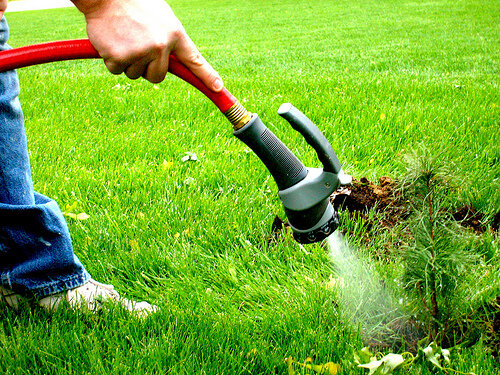
     Trees and Shrubs should be watered every 4-5 days for the entire first year after planting unless rainfall is abundant. Place the end of your hose next to the base of the plant and let the water trickle very slowly for about two hours. This will allow the root zone to become thoroughly saturated.

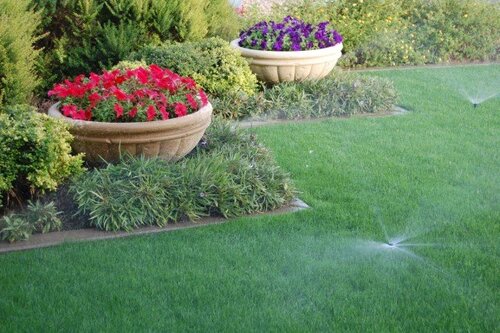
     Established Lawns: your lawn should be watered when the grass blades don’t bounce back after being walked on. One inch of water per week should keep your lawn green and healthy.
IrrigationSprinklerOnLawnBeds.jpg
     Newly Seeded or Sodded Lawns: for better germination, I suggest you mulch grass seed with straw as soon as it is planted. Once seed has germinated or sod has been laid, they must not be allowed to dry out. Water daily with a sprinkler until there is good growth. Once established, go back to the one inch per week rule.

So, continue to enjoy your outdoor spaces and make relationships with your plants!
They can give you so much in return!


See you in the Garden,
Sandi Hillermann McDonald

5/6/20

Tips for the Garden - May 2020


A SAMPLE GUIDE TO EDIBLE GARDENING……


            During this spring season it may be more important than ever to grow your own food. It can be a fun and satisfying activity that can nourish your body and your soul. Most seasoned vegetable gardeners look forward to their time spent in their garden, because the rewards are so great! And the therapy it provides is even better!!

            Most edible plants prefer 6 or more hours of sun, although leaf veggies (like lettuce) can grow with less sunlight. Consider container gardens if you have a bright deck or patio. Edibles can also be incorporated into your flowerbeds and ornamental plantings as well. Be sure the area has good circulation or airflow.

            The key ingredient to a vegetable garden is the soil foundation. Amend the topsoil with compost or well-rotted manure.

            Base your crop selection on what your family likes to eat. Plant your tall crops (like corn and climbers) on the north side of the garden to prevent them from shading the other shorter plants. Plant medium sized plants (like peppers, tomatoes….) towards the center. Short crops, like carrots, radishes, and lettuce, should be planted on the south end. Try to orient your garden from north to south for best sun coverage.

            Here is a sample plant list for a healthy family of four: 10 tomato plants, 4 cucumber plants, 12 broccoli plants, 8 cauliflower plants, 20 lettuce plants, 6 pepper plants, 10 spinach plants, 2 zucchini or squash plants, and essential herbs
                       
Other essentials……Compost, shovel, hard rake and tiller, Fertilizer—natural/organic or commercial, Tomato cages, stakes

            I truly hope you enjoy the spring and summer season and try your hand at growing fresh produce for your family.
                       
See you next month,
Sandi Hillermann McDonald