Showing posts with label Garden Tips. Show all posts

7/31/20

Tips for the Garden - August 2020

  Our summer continues with a lot of unknowns and questions still left unanswered. But the garden will welcome your every visit. Enjoy the opening of every new flower and every new bird or butterfly to visit.

Your main tasks for this month begin with the letter W. Weeding and watering. Both tasks are pretty self-explanatory. If you let weeds get ahead of you and they go to seed, you are going to have hundreds more to deal with this fall and next spring. When using herbicides be sure to read and follow all label directions thoroughly. They are written for your protection. Generally, it is best to pull weeds that are growing in and immediately around your desirable plants, and spray those that are “in the open.”

As far as watering goes, August is usually an extremely low moisture month, so slow deep watering at the base of desirable trees and shrubs on a weekly basis is very important. Try to eliminate drought stress on your plants. When the weather is dry, please take care of your desirable plants with slow soaking waterings. If you have questions, do not hesitate to give us a call.

Mowing the lawn is another task that continues in August. Due to the usually hot and dry conditions that are the norm in August, you may be able to space your mowings further apart. It is also beneficial to let the grass grow longer to help shade the roots.

If you are thinking about a new addition to your landscape this fall, now is the time to talk to your favorite landscape designer. Your designer can discuss your needs with you, design the changes or new additions, and get you on the schedule for a fall installation.

If you tried your hand at seasonal vegetable gardening this spring, here are a few ways you can enjoy a fall garden. Carry Tomatoes, Peppers and Basil over in your fall garden. Direct sow Beets, Radishes, Peas, and Spinach now where other spring crops such as Broccoli and Cauliflower have come and gone for this year. It is best to replant nursery starts of Broccoli and Cauliflower, and not sow them from seed this time of year. The possibilities are still quite many, so carry that garden adventure out a little further into the fall. You won’t be disappointed!


See you next month……….in the garden
Sandi Hillermann McDonald

6/25/20

Tips for the Garden - July 2020

      Well summer has come with a vengeance of heat and humidity. This IS Missouri, right? This summer is seeing the opening of outdoor playgrounds, stores, facilities and so much more. Now is the time to gather and celebrate each other and enjoy nature! But please still do it at a safe distance.

     We have all experienced a NEW spring never seen before with this COVID virus. We have learned from it, became more appreciative of our surroundings, and of family and friends. Now let us get back to keeping our little pieces of sanctuary (and sanity) in tack and enjoyable.

      It’s not too late to plant shrubs, perennials and annual flowers, but you will need to give them a little TLC for the summer.Japanese_Beetles (1)

      If Japanese beetles are attacking your plants, you have several options; from trapping (the safest) to spraying them. Japanese beetle traps are readily available and do a fantastic job of eradicating the problem naturally.

      Hot, dry weather is ideal for spider mite development. Damage may be present even before the webs are noticed. With spider mite damage, leaves may be speckled above and yellowed below. Evergreen needles appear dull gray-green to yellow to brown. Spray with permethrin to control this critter.
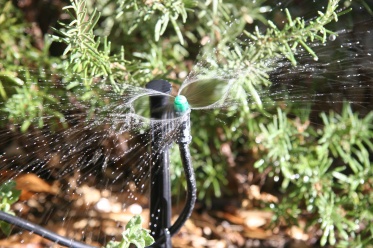
IrrigationDrip-Sprinkle-W       Water conservation is of the utmost importance during our dry summer months. Water where it counts, at the roots, not the leaves. Drip irrigation systems in landscape beds do wonders for water conservation and are easy for the homeowner to install. Trees and shrubs would also benefit from a deep root watering this time of year. You can use a deep root feeder (without the fertilizer) for this purpose. Water plants around the drip line for best success. Doing this every 2-3 weeks is beneficial. When you mow your grass, cut it less frequently and at a higher level. Longer grass blades shade the soil and conserve moisture. Plant drought tolerant, native plants where possible.
Native plants are becoming a true staple in the landscape.Garden_Porch_Hanging_Baskets_PW

      Check your plant containers daily for water. Hanging baskets will need a drink at least once a day, sometimes even twice a day, depending on the weather. Provide water in the garden for birds during dry weather and they will repay you with wonderful antics and bird song. Enjoy nature and your gardens this summer. You will not regret it.

See you in the Garden,
Sandi Hillermann McDonald

5/6/20

Tips for the Garden - May 2020


A SAMPLE GUIDE TO EDIBLE GARDENING……


            During this spring season it may be more important than ever to grow your own food. It can be a fun and satisfying activity that can nourish your body and your soul. Most seasoned vegetable gardeners look forward to their time spent in their garden, because the rewards are so great! And the therapy it provides is even better!!

            Most edible plants prefer 6 or more hours of sun, although leaf veggies (like lettuce) can grow with less sunlight. Consider container gardens if you have a bright deck or patio. Edibles can also be incorporated into your flowerbeds and ornamental plantings as well. Be sure the area has good circulation or airflow.

            The key ingredient to a vegetable garden is the soil foundation. Amend the topsoil with compost or well-rotted manure.

            Base your crop selection on what your family likes to eat. Plant your tall crops (like corn and climbers) on the north side of the garden to prevent them from shading the other shorter plants. Plant medium sized plants (like peppers, tomatoes….) towards the center. Short crops, like carrots, radishes, and lettuce, should be planted on the south end. Try to orient your garden from north to south for best sun coverage.

            Here is a sample plant list for a healthy family of four: 10 tomato plants, 4 cucumber plants, 12 broccoli plants, 8 cauliflower plants, 20 lettuce plants, 6 pepper plants, 10 spinach plants, 2 zucchini or squash plants, and essential herbs
                       
Other essentials……Compost, shovel, hard rake and tiller, Fertilizer—natural/organic or commercial, Tomato cages, stakes

            I truly hope you enjoy the spring and summer season and try your hand at growing fresh produce for your family.
                       
See you next month,
Sandi Hillermann McDonald

4/3/20

Tips for the Garden - April 2020


            Vegetable gardening is making a comeback, and this new fascination is like the Victory Garden rage of yesteryear. Not just because of COVID-19, another contributor to this fascination is the fact that more and more people are concerned with what they put on the family table. When you grow it yourself, you control what goes in the soil and on the plants, and you get to pick a much broader selection of vegetable varieties. They taste a whole lot better home grown.
            If you’re thinking of growing a vegetable garden this year, you are not alone. Start small and expand as your interest and time permit. No summertime garden is complete without tomatoes. Also, bush cucumbers will fit in small gardens, and so will the bush summer squash varieties. They can be planted in nontraditional garden areas like flowerbeds or as a small addition to the landscape. You can interplant lettuce plants with your impatiens and harvest them long before the impatiens covers the area. You’ll get some salad greens and kill two birds with one stone. Taking care of the impatiens ensures the lettuce is never neglected. In short, a vegetable garden can find its way into every area of your home’s landscape - whether it’s confined to its own area, combined into the annual or perennial gardens that you already have, or planted in containers on your deck or patio - it will provide the ultimate in fresh vegetable taste, and the safest vegetables you can produce for your family table.

            Hang out your hummingbird feeders the first of this month. Use a solution of 1-part sugar to 4 parts water for the nectar. Change the solution frequently to keep it from fermenting. Food coloring is NOT needed, nor is it recommended for the birds. Asparagus and rhubarb harvest can begin!! Keep your hoe sharp. Start cucumber, squash, and cantaloupe and watermelon seeds indoors this month. The last week of April is a good time to try an early sowing of warm season crops in the garden such as green beans, sweet corn, etc. You can begin to plant transplants of tomatoes, eggplants, peppers, and sweet potatoes outdoors now. This can continue through the month of May. This is truly the year of the garden. So, reap your own harvest and enjoy the scrumptious flavors of your own produce. Remember, that Natural Gardening will keep your family safe, so check out what organic options are available to you! There are many.


Enjoy!  See you in the garden……Sandi Hillermann McDonald

3/11/20

Tips for the Garden - March 2020


          Spring is almost here!!!!!!  What a wonderful feeling to be able to spend more time outside enjoying what Mother Nature is unfolding before our eyes. The lengthening of days is a welcome site and the warming sun on our faces is also a very great feeling.

Mowing time is around the corner.  Thin spots and bare patches in the lawn can be over seeded now if you don’t intend to use a crabgrass pre- venter on your lawn. Last summer’s heat and drought may make this a necessity this spring, if you missed the opportunity last fall.

          If you don’t over seed, now is the time to apply Fertilome Crabgrass + Lawn Food. We have long summer seasons here and recommend that you make two applications of this product (4-6 weeks apart) to keep your yards crabgrass free this summer. 

          Begin spring cleanup of perennial beds now. Cut perennials to 3” above the ground. Remove damaged foliage and old flower stalks. Ornamental grasses and hardy hibiscus can be pruned back to 6” above the ground as well.

          Once flower beds have been cleaned up, re-mulching can be done. Be sure not to mulch on the crowns of plants. Dry feed beds with a granular fertilizer, such as Osmocote, and apply a pre-emergent if you do not plan to plant any flower seeds. Pre-emergent products will put down a barrier over your flower beds that keep weed seeds from germinating, making weeding an easier job this summer. Divide summer and fall blooming perennials now, along with ornamental grasses if you so desire.

          Plant/sow peas, lettuce, radish, kohlrabi, collards, turnips, potatoes, spinach, onion sets, beets, carrots, and parsley outside this month. Set out broccoli, cabbage, brussels sprouts, Chinese cabbage, cauliflower and pansy transplants now. This month is also great for setting out strawberries, blueberries, blackberries, grapes and fruit trees.

          Start seeds indoors this month for tomatoes, peppers and eggplants. And houseplants can still be repotted. Continue to check houseplants for over wintering insect populations.

          Nesting boxes for bluebirds can be set up as well as Purple Martin houses. Bluebird boxes are best at about 5’ off the ground on a fence post in the open with the entry hole facing away from prevailing winds. Purple Martins return to our zone 6 region between St. Patrick’s Day and the end of the month. So, now is the time to clean out those houses and be prepared.

          It is time to go, so we will “See you in the garden!!”
Sandi Hillermann McDonald

3/12/19

Garden Solutions - March 2019


            WOW what a winter we had this year! Spring is almost here!!! What a wonderful feeling to be able to spend more time outside enjoying what Mother Nature is unfolding before our eyes. The lengthening of days is a welcome site, and the warm sun on our faces is also a very great feeling. We “spring forward” with Daylight Savings Time on Sunday, March 10 this year. That is exciting.

            The grass will be greening up and mowing time is just around the corner. Mow lawns now to remove old growth and the last of winter’s leaves before new growth begins. Thin spots and bare patches in the lawn can be over seeded now if you don’t intend to use a crabgrass preventer on your lawn. Last summer’s heat and drought may make this a necessity this spring, if you missed the opportunity last fall.

            If you don’t over seed your lawn, now is the time to apply Fertilome Crabgrass Plus Lawn Food. We have long summer seasons here, and actually recommend that you make two applications of this product (4-6 weeks apart) to keep your yards crabgrass free this summer. 

            Begin spring cleanup of perennial beds this month. Cut perennials to 3” above the ground. Remove damaged foliage and old flower stalks. Ornamental grasses and hardy hibiscus can be pruned back to 6” above the ground now.

            Once flowerbeds have been cleaned up, re-mulching can be done. Be sure not to mulch on the crowns of plants. Top dress or dry feed beds with a granular fertilizer, such as Osmocote, and apply a pre-emergent to help keep weed seeds from germinating. Divide summer and fall blooming perennials now, along with ornamental grasses if you so desire.

            Plant/sow peas, lettuce, radish, kohlrabi, collards, turnips, potatoes, spinach, onion sets, beets, carrots, and parsley outside this month. Set out broccoli, cabbage, Brussels sprouts, Chinese cabbage, cauliflower and pansy transplants now. This month is also great for setting out strawberries, blueberries, blackberries, grapes and fruit trees.

            Start seeds indoors this month for tomatoes, peppers and eggplants. And houseplants can still be repotted. Continue to check houseplants for over wintering insect populations.

            Nesting boxes for bluebirds can be set up as well as Purple Martin houses. Bluebird boxes are best at about 5’ off the ground on a fence post in the open with the entry hole facing away from prevailing winds. Purple Martins return to our zone 6 region between St. Pat’s Day and the end of the month. So, now is the time to clean out those houses and be prepared.

            It is time to go, “See you in the garden!!”
Sandi Hillermann McDonald


2/8/19

Garden Solutions - February 2019


             February continues with dreary weather, but the anticipation of spring is closer every day.  Our daylight hours are getting a little longer, which holds the promise that spring will be here soon.  There are a few things to remind ourselves of, in preparation for this fabulous time of year.

            Seed sowing time is upon us!  Now is the time of year to start seeds indoors for slow growing annuals such as Ageratum, Petunias, Geraniums, Impatiens, Salvia and Coleus. Check out the great selections of seed varieties available. We may now also move into our gardens outside, if the weather permits, to start the seeds of Peas, Lettuce, Spinach and Radish. What a great feeling to work in the fresh air again!
           
            Keep an eye out for Chickweed and Henbit in your lawn.  These two early weeds have already emerged and will be thick this year.  Spot treat these areas with Fertilome Weed-Out weed killer to keep it from going to seed.

            Amaryllis and Paperwhite bulbs can still be forced indoors this winter.  Make sure you keep the top 1/3 of the bulb out of the container, place into a sunny window, water and enjoy.  Houseplants will be coming out of their winter dormancy soon, so now is the time to consider repotting and trimming root bound plants.  This works best before vigorous growth occurs.  When transplanting, choose a container that is about 2” larger in diameter than the old pot your plant is in today.  This will make for an easier transition period for your plants.  Add a slow release fertilizer, such as Osmocote, at this time. We have a great selection of new and fun plant varieties.

            Service and repair your lawn and garden equipment if you haven’t already done so.  Sharpen and oil your hand tools, if this wasn’t done last December when you put your gardens to rest.  A bucket of sand and a quart of motor oil work great for cleaning and oiling our tools.  Pour the motor oil into the sand and insert your tool blades. This will help keep them clean and keep them from rusting.  Have your lawn mower tuned up and the blades sharpened this month also.

            Deep root feed all trees and shrubs once the soil thaws.  This gets the plants off to a great start for spring.  The fertilizer has a chance to flow up with the sap and directly to the new growth giving way for great green foliage and flowers.

            Dormant spray all fruits, berry plants and roses with a dormant oil spray when the temperature is above 40*.  This will help protect the plants from any over wintering fungus spores and insect eggs.

            It is time to go, so we will “See you in the garden!”

Sandi Hillermann McDonald

8/3/17

Garden Solutions - August 2017


August… besides vacations, other activities that will pull you away from your list of gardening duties are fairs, festivals, family outings, and back to school preparations. It really is a good thing that August is a slow month for working in your landscape.

Here are a few health benefits of enjoying the outdoors. Studies show that depending on the activity, gardening can burn between 250 and 500 calories per hour. For many people gardening is a creative outlet, for others it’s the change of scenery from the daily grind that makes a difference. Still others find that the satisfaction of reaping the rewards (those tasty fruits and vegetables, and beautiful flowers) of your efforts is what helps to reduce stress levels.

Your main tasks for this month both begin with the letter W. Weeding and watering. It is important to stay on top of the weeds. If you let them get ahead of you and they go to seed, you are going to have hundreds more to deal with this fall and next spring. Spraying weeds with an herbicide such as Roundup is one of the easiest ways to rid of weeds.  Be very careful when spraying around the plants that you want to grow in your landscape. It generally is best to pull weeds that are growing in and immediately around your desirable plants, and spray those that are “in the open”. As far as watering goes, most plants will survive on 1” of water a week. A rain gauge will help measure the amount.

Mowing the lawn is another task that continues in August. Due to the usually hot and dry conditions that are the norm in August, you may be able to space your mowing times further apart. That is unless you have an irrigation system to keep your lawn growing vigorously.

If you are thinking about a new addition to your landscape this fall, now is the time to talk to your favorite landscape designer. Your designer can discuss your needs with you, design the changes or new additions, and get you on the schedule for a fall installation.


If you tried your hand at seasonal vegetable or square foot gardening this spring, here are a few ways you can enjoy a fall garden. Carry tomatoes, peppers and basil plants over in your fall garden. Direct sow beets, radishes, turnips, leafy greens and spinach now where other spring crops such as broccoli and cauliflower have come and gone for this year.  Replant nursery starts of broccoli and cauliflower. 


Last but not least, take care of yourself. During the hot time that is referred to as August, it is easy to over exert yourself. Drink plenty of fluids and rest in the shade as needed.

See you next month……….in the garden
Sandi Hillermann McDonald

3/8/17

Garden Solutions - March 2017


Spring is almost here!!! What a wonderful feeling to be able to spend more time outside enjoying what Mother Nature is unfolding before our eyes. The lengthening of days is a welcome site. We “spring forward” with Daylight Savings Time on Sunday, March 12 this year. That in itself is exciting.

Once flowerbeds have been cleaned up, re-mulching can be done. Top dress or dry feed beds with a granular fertilizer, such as Osmocote, and apply a pre-emergent if you do not plan to plant any flower seeds. Divide summer and fall blooming perennials now, along with ornamental grasses if you so desire.

Plant/sow peas, lettuce, radish, kohlrabi, collards, turnips, potatoes, spinach, onion sets, beets, carrots, and parsley outside this month. Set out broccoli, cabbage, Brussels sprouts, Chinese cabbage, cauliflower and pansy transplants now. This month is also great for setting out strawberries, blueberries, blackberries, grapes and fruit trees.

Start seeds indoors this month for tomatoes, peppers and eggplants. And houseplants can still be repotted. Continue to check houseplants for over wintering insect populations.
Nesting boxes for bluebirds can be set up as well as Purple Martin houses. Purple Martins return to our zone 6 region between St. Pat’s Day and the end of the month. So, now is the time to clean out those houses and be prepared.      

And I mentioned last year there was a big push for saving Monarch butterflies and other pollinating insects. Well these endeavors will be even more prevalent this year as education for this important movement continues.

Lucky for monarchs, there are ways you can help. Gardening for wildlife is a great way to help provide food, water, shelter and place to raise young for all types of wildlife.

For monarchs, you can plant native flowering plants, especially milkweed, to help feed the larvae of these beautiful butterflies! This year also get involved in the www.millionpollinatorgardenchallenge.org. This is a national push for pollinator gardening involvement. Beekeeping is another way to bring pollination home. 

The City of Washington, Washington in Bloom, FC Master Gardeners and the Washington Garden Club will be pushing efforts to not only make awareness for Monarchs BUT ALL pollinators in this year’s programs. Stay tuned to see what they have in store! 


7/7/16

Garden Solutions - July 2016

PREPARE FOR “NEW” POLLINATORS            

            With fewer honeybees these days, it’s time to welcome alternative pollinators into your garden. We’ve all heard the news: Populations of the honeybee are declining. Factors such as habitat loss, pesticide use, and diseases have taken a toll on these heroes of the horticultural world.

            The story that seldom gets attention is that for home gardeners there are plenty of native pollinators. Roughly 4,000 species of bees are native to North America, including approximately 45 types of bumblebees. Plus, many types of flies, certain wasps, and even butterflies and bats can act as pollinators.

            By attracting a diversity of these beneficial visitors, pollination in your garden will improve. Thus, yields of edible crops like tomatoes, squash, cucumbers, peppers, and berries will increase. You can take three steps to welcome pollinators to your garden.

1.         PROVIDE NECTAR AND POLLEN RICH PLANTS, INCLUDING NATIVES AND HERBS. The native pollinators in our region have co-evolved with the native plants, so use native wildflowers to draw them to your yard. To maintain a population of pollinators, it is important to have plants in bloom all season long. Even a small garden can support local pollinators.  Herbs can attract native pollinators and provide them with nourishment, too. Native plants are easy to grow because they are adapted to our local climate and growing conditions and, once established, are fairly low-maintenance.

2.         ENSURE THAT POLLINATORS HAVE NEST SITES. Many native pollinators nest underground, so have some open areas.  Bumblebees often make their homes in abandoned mouse and vole tunnels, while others prefer piles of rock. Small bees may fly only a few hundred yards from their nest when foraging; large bees will travel a mile or more in search of food. Mixing pollen and nectar plants among your fruit and vegetables will keep bees close to the plants you want them to pollinate.

3.         STOP USING PESTICIDES. Pesticides are toxic to pollinators. Pesticides should not be used on plants in bloom. If you must, apply pesticides either near dark or very early in the morning. At these times, insects are less active. The best choice is to use natural pesticides and there are many available today. Visit your local independent garden center for help with the best natural insect controls to use for different plant pests.

            Please consider joining the efforts of the City of Washington Parks Department and Washington In Bloom to help pollinators with the 100 Pollinator Garden Challenge Program and claim your garden as a pollinator habitat. Current gardens that include pollinator plants (blooming native, perennial and annual plants) can be registered, or you can find an area in your yard that receives at least 6 hours of sun to plant your garden including natives, perennials and annuals to provide nectar from April through October.

            To register your garden: bring a picture of your garden to the Washington Parks Department Office at 1220 Lakeshore Drive in Washington to register for certification and receive a certificate. Official Certified Pollinator Garden Metal Signs are also available through Washington Parks Department for $15.00. The signs are a great way to promote this challenge and enhance your beautiful garden. Call the Washington Parks Department at 636-390-1080 for more information.

7/9/15

Garden Solutions - July 2015

            I, for one, cannot believe it is the first of July already. This year is really flying by. This is the month for picnics, vacations, family reunions, and for just enjoying the outdoors in general. One of the tasks to take care of this month is weeding. If you put a pre-emergent weed control product in your landscape beds in March or April, you are due for a second application now. There are two reasons for this. First, most of the pre-emergent products that are available to the homeowner have a short life span, up to 60 days. The second reason is due to all of the rain we have had. However, there are many benefits to the very adequate rainfalls this year. One of them is the ease with which some normally difficult weeds can be pulled. So take time to clean up your landscape beds and apply a pre-emergent as soon as possible.

            The long hot days of summer are stressful to every living creature, including all your plants. If you are tired of the endless task of keeping your plants watered, it is time to think about adding mulch to your beds. I know that hotter weather is just ahead, so do yourself and your plantings a huge favor and apply mulch. If you have beds that have never been mulched, add 3” around all annuals, perennials, roses, trees and shrubs. Top dress previously mulched beds with an additional inch of fresh mulch. Not only does mulch hold in moisture, relieving you of some of your watering tasks, it also keeps the soil cooler, so your plants will be less heat-stressed. An added bonus is that weed seeds have a difficult time germinating when buried in mulch, reducing the time you spend weeding. 

            One of the most common questions that we receive at this time of year is, “How much do I water my ______?” I will try to explain some basic guidelines here:

             Vegetables and Bedding Plants planted in the ground: established plants need at least one inch of water per week, more when bearing fruit. Check the soil around the plants, when it is dry one inch down, it’s time to water.


            Container Gardens and Hanging Baskets: check your containers every day for water. Either test the soil by touch or lift the pot. Most baskets and many containers will need to be watered once, or even twice a day, depending on the weather. I suggest you fertilize once a week.


            Perennials: newly planted perennials need daily watering until established, at least one to two weeks, depending on weather. After they show signs of new growth, apply a one inch per week rule.

            Trees and Shrubs: newly planted trees and shrubs should be watered every 4-5 days for the entire first year after planting, unless rainfall is abundant. Place the end of your hose next to the base of the plant and let the water trickle very slowly for about two hours. This will allow the root zone to become thoroughly saturated.

            Established Lawns: your lawn should be watered when the grass blades don’t bounce back after being walked on. One inch of water per week should keep your lawn green and healthy. It is best to water early in the morning, before the heat of the day. This keeps evaporation to a minimum, and allows plenty of time for the grass to dry before nightfall, which will help prevent fungus problems.

            Newly Seeded or Sodded Lawns: for better germination, I suggest you mulch grass seed with straw as soon as it is planted. Once seed has germinated or sod has been laid, they must not be allowed to dry out. Water daily with a sprinkler until there is good growth. Early morning is again the best time. Once established, go back to the one inch per week rule.

            Water Gardens: also require an occasional addition of water. Check your pond weekly and add water as needed. Water plants have variable depth requirements, so you need to keep the water levels consistent.

            So continue to enjoy your outdoor spaces and make relationships with your plants! They can give you so much in return!


See you in the Garden,

Sandi Hillermann McDonald


8/8/14

Garden Solutions - August 2014

            August brings us the dog days of summer... there is no doubt about that. If you have not started enjoying “Outdoor Living,” it is NOT TOO LATE. There are designers in the landscape industry to help you with ideas that will turn your yard into an outdoor oasis. More and more people are retreating to their own backyards. Look for inspiration at every “independent lawn and garden retailer.” Consider adding a water feature to “cool” things down a bit.
            Here are a few health benefits of enjoying the outdoors. To the non-gardener or hard-core athlete, gardening may seem like a sedentary activity, but it is not. Activities like carting mulch around in a wheelbarrow, digging in the soil, plus all that bending and lifting involved in planting really does burn calories. Studies show that depending on the activity, gardening can burn between 250 and 500 calories per hour. For many people gardening is a creative outlet, for others it is the change of scenery from the daily grind that makes a difference. Still others find that the satisfaction of reaping the rewards of their efforts (those tasty fruits and vegetables, and beautiful flowers) is what helps to reduce stress levels. So try it out and let me know what you think. I would love to hear your gardening stories. You can email me at sandi@hillermann.com.

            You desperately need to continue watering in your gardens and landscape during this month. There are many ways to supply water economically and easily, just ask the experts. In-ground irrigation systems are available as well as drip irrigation systems. Drip irrigation systems are very easy for the homeowner to install. Wildlife in your yard, as well as all new and established plantings, need your help during hot, dry summer days. Deep root watering is the most beneficial for established plantings. If you want to learn more about this procedure, ask the experts.

            Visit the Washington Town & Country Fair this year on August 6 through 10, 2014. Don’t miss these two educational booths: Agri-Land and Hillermann’s Garden Solutions booth. Both of these booths offer fun, hands-on learning opportunities. See the creative displays and get helpful plant, landscaping, and item information, and enter contests for a chance to win prizes at the Gardening Solutions booth.

Here are tips for the heat and drought period of August:

Ÿ         You should apply lawn insecticides until August 15 to guard off grubs, fleas, ticks, etc. in the yard.

Ÿ         Japanese beetles can be eliminated by trapping. Beetle traps are available and safe/organic to use.

Ÿ         Think “green” and recycle your planting containers.

Ÿ         Keep deadheading spent annual and perennial flowers for continued bloom.

Ÿ         Feed garden mums and asters for the last time.

Ÿ         Monitor plants for spider mite activity. Hose affected plants off with a forceful spray of water, or spray with Bonide Eight (with Permethrin). To check for spider mites, hold a white piece of paper under a suspected branch. Tap on the branch and then run your hand across the paper. If you get red streaks, you have spider mites!

Ÿ         Roses should receive no further nitrogen fertilizer after the end of August to prevent the production of late tender growth that could be damaged by fall frosts.

Ÿ         Soak shrubs periodically during dry spells with enough water to moisten the soil to a depth of 8-10 inches.

Ÿ         Prune to shape hedges for the last time this season.

Ÿ         Once bagworms reach full size, insecticides are ineffective. Pruning off and burning or discarding of large bags provides better control.

Ÿ         Watch for fall webworm activity. Apply Fertilome Bagworm and Tent Caterpillar Spray when spotted.

Ÿ         Cultivate Strawberries and apply weed preventer immediately, after fertilizing to help with fall germinating weeds such as henbit or chickweed.

Ÿ         Protect ripening fruits from birds by covering plants with bird netting. This is a black mesh netting and is readily available at Garden Centers.

Ÿ         Pinch the growing tips of gourds once the adequate fruit set amount is achieved. This directs energy into the ripening fruits, rather than vine production.

Ÿ         Broccoli, cabbage and cauliflower transplants should be set out for the fall garden. Also, sow seeds of lettuce, radish, beans, beets, spinach and turnips now. (Spinach may germinate better if the seeds are refrigerated.)

Ÿ         For additional information about garden tips for summer and all seasons, check out this website www.hillermann.com.


Time to go...  See you in the Garden!!

Sandi Hillermann McDonald