2/12/20

Tips for the Garden - February 2020


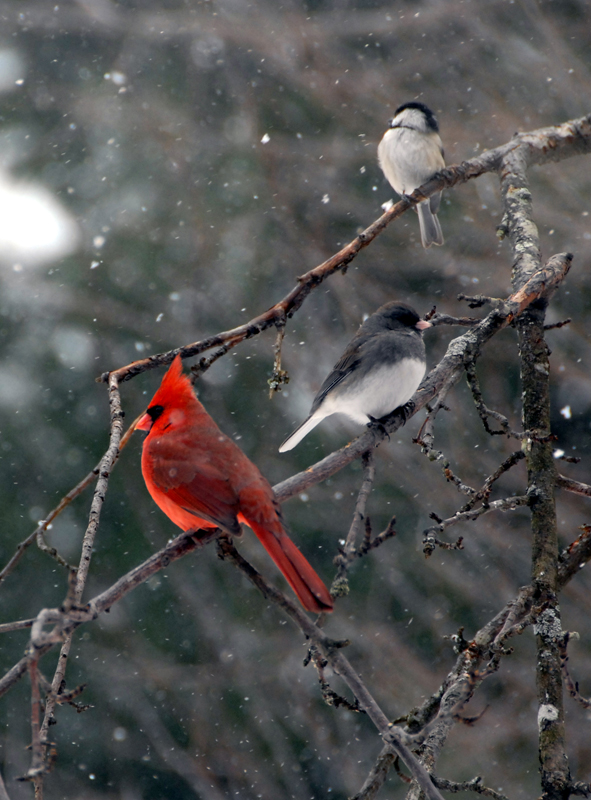
February is National Bird Feeding Month… this year the Audubon Society will be making national awareness of the decline of birds in North America. This awareness of loss of nature began more than several years ago with bees, then butterflies, to pollinators and this year will focus on the loss of birds and their habitat. The next will be frogs. Our world is losing nature and it’s help for human survival at an alarming rate. I truly hope by now that these declines in nature have hit home with you and that you realize that now it is time to do something about it ourselves. You will hear much more about these environmental efforts throughout the year. 

For winter care of birds one of the easiest things to provide is water. Providing shelter is another way to help. There is a shortage of nesting sites for cavity-nesting birds due to land development, and the use of pesticides. The use of birdhouses and nesting boxes has helped many species make a comeback. Landscaping that provides shelter can be a great help. Evergreen trees and shrubs provide a place out of the wind, snow or rain. Birds gather in groups towards the inside and huddle together to create more warmth.

The final piece of the puzzle is providing food. Here in Missouri, winter is a difficult time for the bird species that have chosen to overwinter here. There is little to no vegetation, and most of the insects are dead or dormant. Most songbirds feed on insects and spiders during the spring and summer; however, the non-migratory species switch to fruit and seeds in the fall and winter. Black oil sunflower seeds are preferred by the largest number of bird species. Enjoy the birds this season with these simple tips.

It is also time to think about starting any garden and flower seeds in the house that you may want to grow this year. Our last frost date is around May 1st, so back up the weeks on the calendar for seed starting so you know when the best time for planting in the house would be. Ample light is very important for this task.

Another cold weather job is cleaning up any containers or planters that you have stored away. While doing this, make a list of the flowers that you are going to need for these containers in the spring.

Until next month,    
Sandi Hillermann McDonald

12/30/19

Tips for the Garden - January 2020


OUR NEWEST ENVIRONMENTAL CHALLENGE

            It is hard to say who benefits more from backyard bird feeders - the birds or the people who feed them. Some of life’s more enjoyable moments include the songs and antics of the birds outside our windows. Watching them is so captivating that it can alter an entire day’s plans, turning a twenty-minute breakfast into a three-hour brunch. Activity at your feeders probably can hold your attention all day with its ever-changing pattern of form and color, from fluffed-up chickadees to sleek cardinals.  But yet I hear, where have all the birds gone?  I don’t have as many as I used to.

            Until recent years the brightest spot on the winter landscape, with the most activity, is the bird feeder in the backyard. No matter what size yard or garden you have, you can create your own bird haven. All you need are food, water, and shelter. Shrubs and evergreens are good, not only to offer cover during harsh northern winters, but also to protect birds from their natural enemies. I encourage you to look at your landscape and see what you can do to encourage wild bird habitat.

            Several years ago, there was a national call to ‘save the bees!’. The last two years it has remained bees, and the Monarch butterfly was added to the list. This year you will be reading quite a lot from the National Audubon society as well as other environmental groups that we should now be worried about the huge decline in our native bird numbers. Birds are very important to our ecological and environmental health. They too, are great pollinators, and help keep insects at bay.

            So, I ask you, to look around your neighborhoods and parks. Close your eyes and listen. Maybe not as melodious as it used to be? The ultimate bird songs so familiar as we were growing up, not as prevalent. Now is the time to act and plan to enhance your gardens and landscapes with beneficial plants such as native species that will feed our feathered friends. Let’s continue to increase the pollination process we need for good environmental health.

            Start this winter by offering food, water and shelter to our feathered friends. It is so easy to do, and we can help. Next spring add natives to the landscapes or containers, and we will be well on our way of enhancing our little piece of heaven here on earth.

            Happy New Year dear friends…
           

See you in the garden…
Sandi Hillermann McDonald


12/13/19

Tips for the Garden - December 2019


Tips for the Garden - December 2019


The month of December brings the holiday season and warm thoughts of family, friends and community. I would like to say “Thank You” and wish you and yours a “Blessed Holiday Season” with all the best in the New Year!

Fall will turn into winter this month. It may not always be the most comfortable time to be planting anything in your landscape, but it is a great time for the plants. Trees and shrubs are completely dormant now, so the concept of transplant shock does not apply. 

Trimming or pruning of some of your trees and shrubs can be done now. Basically, it breaks down like this, if the tree or shrub flowers before the 1st of June don’t touch it now. If it flowers after the 1st of June, you can safely cut it now. Resist the urge to cut back everything.

Here are a few tips on winter houseplant care. Flowering plants need at least half a day of direct sunlight. Cacti and many succulents require a sunny location, and crotons need direct sun to maintain the decorative color. The ideal temperatures for foliage plants are 68-70 degrees during the day and slightly lower at night. The amount of water the houseplants need declines during winter, so increase the amount of time between watering.  Reduce fertilizing as well.

Some of the plants in your landscape can help you decorate for the Christmas season as you prune them for next year. Holly and Boxwood can be trimmed now with some of the cuttings used to accent wreaths or live indoor plants. Some of the growth of evergreens such as White Pine, Norway Spruce, and even some of the seed heads of ornamental grasses can be used to make a harvest wreath or basket for your front door or porch. Talk about recycling! After Christmas, you can take them to your compost bin for future fertilizer!

Continue to feed our fine feathered friends and place heated birdbaths with fresh water out for them.

Again, I wish you and your family a very Blessed Christmas season. Let’s get to work on planning that beautiful garden scene for next year!

See you in the Garden…………..
Sandi Hillermann Mcdonald


11/8/19

Tips for the Garden - November 2019


Attracting Birds to your Neighborhood

There are a number of ways to attract birds to your garden, from planting native plants to providing safe stopover areas for them to eat, drink and nest.

Provide water year-round - A simple birdbath is a great start. Change water every 2-3 days in summer and use a heater in the winter. Place the water container about 10 feet from dense shrubs or other cover that predators may use.

Then, install Natives Plants-- Select a variety of native plants to offer year-round food in the form of seeds, berries, nuts, and nectar. Try to recreate the plant ecosystem native to your area. Evergreen trees and shrubs provide excellent cover through all seasons, check our www.grownative.org for an amazing lists of local natives great for pollination and food sources.

Eliminate insecticides in your yard - Insects are the primary source of food for many bird species and are an important source of protein and fats for growing juvenile birds.

Keep dead trees - Dead trees provide cavity-dwelling places for birds to raise young and as a source to collect insects for food. Many species will also seek shelter from bad weather inside these hollowed out trees.

Put out nesting boxes - Make sure the boxes have ventilation holes at the top and drainage holes below. Do not use a box with a perch, as house sparrows are known to sit on a nesting box perch and peck at other birds using the nesting box. Be sure to monitor the boxes for invasive animal species known to harm or out-compete native species.

Build a brush pile in a corner of your yard - Start with larger logs and top with smaller branches. Some birds will hunt, roost or even nest in brush piles.

Put out bird feeders--Bird feeders are great sources of supplemental food during times of food scarcity, and also enhance bird viewing opportunities.  Wintertime is beneficial for this as the natural source of pods and seeds become scarce.

Remove invasive plants from your wildlife habitat - Many invasive plants out-compete the native species favored by birds, insects and other wildlife. Check with your local U.S. Department of Agriculture Cooperative Extension System office for information on plant species to avoid.

I hope you enjoy these tips for enjoying more wildlife in your yards!

Enjoy every minute! 
Sandi Hillermann McDonald


10/23/19

Tips for the Garden - October 2019


Wow! Fall is the perfect time to evaluate the garden for improvement, and it is the perfect planting time. The cooler crisp days of October are great for these following garden tips:

Lawn seeding should be finished by October 15th to insure germination and growth yet this fall. Choose a seed mix for your lawn area. Fescue blends are spread at a rate of 5-8 lbs. per 1,000 sq ft on bare ground and 3-5 lbs. per 1,000 sq ft on a lawn with a 50% stand of grass.

Be sure to aerate and renovate your yard when over seeding for BEST results. Without these steps, it is like throwing grass seed on to concrete. Have questions??? Ask the experts at your Hillermann’s.

Winterize your lawn mowers before storage, by draining gasoline from the tank and the gas line.  It is also a great time to sharpen the blades so you will be ready for spring.

Put a Winterizer fertilizer on all lawns from mid October through November to promote early spring green growth.  Now is a good time to apply lime if your soils indicate the need. (Acidic soils require lime, a pH of 6.8 or below.) Use the recommended rate of 50 pounds per 500 square feet per treatment.  Free pH testing is available at Hillermann’s.

YOUR HOME’S CURB APPEAL can be enhanced with pumpkins, gourds, corn stalks, mums, pansies, kale, and the great selection of other plants grown for the fall season.

The average first frost October 15th to October 20th. A few degrees of frost protection can be gained by covering tender plants with sheets, newspaper, burlap or lightweight fabric row covers. DO NOT USE PLASTIC; this tends to “draw in” the cold temperatures.


Plant bulbs now for spring bloom. Plant into groupings for a massed effect of spring color. To fertilize them, use bone meal.  Bulb container gardens can be planted with a lasagna type planting arrangement (layering of bulbs in potting soil).


October is an excellent month to plant trees, shrubs and perennials. This gives the plants a great start in the warm soil and cool weather of fall with plenty of moisture in the spring to become established before the harsh summer heat and drought. The plants’ roots will continue to develop under ground until freezing of the soil stops them.

DON’T take hummingbird feeders down before mid October. The bird’s biological clock tells them when to migrate south. THEY ARE NOT dependent on us removing the feeders at a certain time.  Hummingbirds who have started their migration will appreciate finding your feeders along the way.
          
            Enjoy your yard and garden in every season!

Time to go… See you in the Garden…
Sandi Hillermann McDonald