Showing posts with label fall lawn and garden tips. Show all posts

11/5/20

Tips for the Garden - November 2020


Our fall season has been very dry. Even though the foliage on trees and shrubs is gone, the roots need moisture to build up spring buds and increase root growth. The amount of water needed may be less than when the foliage was on the plants, but water is still very important. 

It is sad to watch the garden fading into winter, but at least we don’t have to say goodbye. Spring will return, as naturally as the sun will rise tomorrow morning. All we have to do is get the garden prepped so that it can rest until its renewal a few months from now. Here is a to-do list that will help you prepare your garden for its winter’s nap.

Clean out and cut back. But, don’t cut all your plants back to the ground, and don’t pick up every leaf. It is a great treat to leave some seed heads on plants for the winter birds and ornamental grasses for their winter art in the garden.  Leaving some plant stalks to protect the crowns of tender perennials is also beneficial.

Cover up. Mulch is the best winter protection for your plants. Wait until the ground has frozen slightly, usually around Thanksgiving for us, to ensure the plants are in their dormancy state. If the snow falls before you get the opportunity to get the job done, mulch over the snow. 

Dig in. Trees, shrubs and plants that have a root ball larger than a gallon can be put into the ground. In addition, now is the time to plant those spring beauties we call bulbs. To enjoy the beauty and bright colors of tulips, hyacinths, and daffodils as well as crocus and alliums, plant them NOW. 

Here are a few other duties to think about this month of November. Continue mowing lawn grasses as long as they keep growing, 3” is a good height. Apply Winterizer fertilizer to lawns to strengthen plant stems and roots for winter growth and early spring green up. 

Set up bird feeders. Birds also appreciate a source of unfrozen drinking water during the winter. Use one of the many styles of birdbath heaters or heated birdbaths available at garden centers. When feeding the birds, set up a variety of feeder types to get the best assortment of birds to come to your yard. Tube feeders are good for songbirds, platform feeders are good for cardinals and larger birds, and suet is a great source of fat and energy for woodpeckers and all bird types.


Enjoy the antics of wildlife and the beauty of plant art in the garden during this upcoming winter season. I will give you more to look forward to in the winter garden in December. Until then, Happy Thanksgiving to all and enjoy the outdoors as much as possible.


See you in the garden,
Sandi Hillermann McDonald


10/23/19

Tips for the Garden - October 2019


Wow! Fall is the perfect time to evaluate the garden for improvement, and it is the perfect planting time. The cooler crisp days of October are great for these following garden tips:

Lawn seeding should be finished by October 15th to insure germination and growth yet this fall. Choose a seed mix for your lawn area. Fescue blends are spread at a rate of 5-8 lbs. per 1,000 sq ft on bare ground and 3-5 lbs. per 1,000 sq ft on a lawn with a 50% stand of grass.

Be sure to aerate and renovate your yard when over seeding for BEST results. Without these steps, it is like throwing grass seed on to concrete. Have questions??? Ask the experts at your Hillermann’s.

Winterize your lawn mowers before storage, by draining gasoline from the tank and the gas line.  It is also a great time to sharpen the blades so you will be ready for spring.

Put a Winterizer fertilizer on all lawns from mid October through November to promote early spring green growth.  Now is a good time to apply lime if your soils indicate the need. (Acidic soils require lime, a pH of 6.8 or below.) Use the recommended rate of 50 pounds per 500 square feet per treatment.  Free pH testing is available at Hillermann’s.

YOUR HOME’S CURB APPEAL can be enhanced with pumpkins, gourds, corn stalks, mums, pansies, kale, and the great selection of other plants grown for the fall season.

The average first frost October 15th to October 20th. A few degrees of frost protection can be gained by covering tender plants with sheets, newspaper, burlap or lightweight fabric row covers. DO NOT USE PLASTIC; this tends to “draw in” the cold temperatures.


Plant bulbs now for spring bloom. Plant into groupings for a massed effect of spring color. To fertilize them, use bone meal.  Bulb container gardens can be planted with a lasagna type planting arrangement (layering of bulbs in potting soil).


October is an excellent month to plant trees, shrubs and perennials. This gives the plants a great start in the warm soil and cool weather of fall with plenty of moisture in the spring to become established before the harsh summer heat and drought. The plants’ roots will continue to develop under ground until freezing of the soil stops them.

DON’T take hummingbird feeders down before mid October. The bird’s biological clock tells them when to migrate south. THEY ARE NOT dependent on us removing the feeders at a certain time.  Hummingbirds who have started their migration will appreciate finding your feeders along the way.
          
            Enjoy your yard and garden in every season!

Time to go… See you in the Garden…
Sandi Hillermann McDonald

9/14/19

Garden Solutions - September 2019

By Sandi Hillermann McDonald, Hillermann Nursery & Florist

Fall is almost here! Where did the summer go? The kids are back in school. The weather has been quite different this year compared to last year’s drought, heat, etc. It was a nice change considering normal summer weather for our area. I am sure you have heard the phrase “Fall is for Planting,” but do you know why we say this? Given the mild temperatures and generally adequate rainfall, the conditions are excellent for establishing new plantings. The result are plants that grow faster and bigger, and they bloom better. The plant’s root systems get a second growing season before they have to manage our hot, dry summers. Roots will continue to grow until freezing of the ground stops them.

Transform the entrance to your home into a welcoming, colorful fall display with potted mums, cabbage and kale, cornstalks, ornamental grasses, an assortment of pumpkins and squash, and maybe a scarecrow set on a hay bale.

Don’t forget spring flowering bulbs. Now is the time to get the best selection. You have until the middle of December to get them planted. Fall bulb varieties include Tulips, Hyacinths, Daffodils and Crocus to name a few.

September is THE lawn renovation month. Even though this year’s wetter summer was not as harsh on our lawns, now is the time to consider renovation and aeration. Aeration helps control thatch, improves the soil structure, helps create growth pockets for new roots, and opens the way for water and fertilizer to get to the roots of your lawn. Aeration is the process of removing thousands of small cores of soil 1” to 3” in length from your lawn. These cores “melt” back into the lawn after a few rainfalls. The holes in the soil created by aeration make perfect pockets for catching fertilizer and water. Turf roots naturally grow toward these holes and thicken in the process. Aeration holes also relieve pressure from compacted soils, letting more oxygen and water move into the root zone of your lawn.

Once aeration is done, it is time to over seed your lawn. Fescue lawn mixes tolerate heat, drought and traffic from kids and pets better. After seeding, top dress with a starter type fertilizer, and you are ready to enjoy a beautiful green lawn for fall and spring!

The fall of the year is perfect timing for tree planting. You should give some thought to choosing varieties for that special spot. Sun exposure, soil moisture, and the available growth space needs to be assessed to help with tree selection. So, plant a tree this fall. You will help the environment, lower your electric bills, and enhance your property value.

Here are a few other quick tips for this month. Begin to adapt your houseplants for winter indoors. Check for pests and treat if necessary. Houseplants should be brought indoors at least one month before the heat is normally turned on. Sow fall vegetable crops through mid September. Harvest herbs now to freeze or dry for winter.

See you in the Garden……
Sandi Hillermann McDonald

11/6/15

Garden Solutions - November 2015

        Our fall season has been very dry. Even though the foliage on trees and shrubs is gone, the roots need moisture to build up spring buds and increase root growth. The amount of water needed may be less than when the foliage was on the plants, but water is still very important.
It is sad to watch the garden fading into winter, but at least we don’t have to say goodbye. Spring will return, as naturally as the sun will rise tomorrow morning. All we have to do is get the garden prepped so that it can rest until its renewal a few months from now. Here is a to-do list that will help you prepare your garden for its winter’s nap.
        Clean out and cut back. Loads of dead leaves and rotten stalks on plants can harbor disease, even through the winter season. But, don’t cut all your plants back to the ground, and don’t pick up every leaf. It is a great treat to leave some seed heads on plants for the winter birds and on ornamental grasses for their winter art in the garden.  Leaving some plant stalks to protect the crowns of tender perennials is also beneficial.
        Cover up. Mulch is the best winter protection for your plants. Wood mulch is the most common. Wait until the ground has frozen slightly, usually around Thanksgiving for us, to ensure the plants are in their dormancy state. If the snow falls before you get the opportunity to get the job done, mulch over the snow. Some woody perennials and shrubs may benefit from soil mounded around the base. These plants, in our area include, roses, crape myrtle, butterfly bushes to name a few. Tender shrubs may need to be screened or wrapped with burlap or something similar, not plastic.
        Dig in. There is still time to plant some garden jewels this month. Trees, shrubs and plants that have a root ball larger than a gallon can be put into the ground. In addition, now is the time to plant those spring beauties we call bulbs. To enjoy the beauty and bright colors of tulips, hyacinths, and daffodils as well as crocus and alliums in spring, plant them NOW. Bulbs need 10-12 weeks of cold soil temperatures. Therefore, in our area you can plant up to the Christmas season, as long as frost hasn’t built up in the soil. 
        Write down. You will find that a garden log or journal will be very helpful next spring when you’re trying to identify those first tentative green shoots and wondering whether you divided that Hosta plant last fall or should you do it now. Draw a basic diagram of each bed, noting the plants and adding photos where you can. A little extra effort with your journal will pay off next spring.
        Here are a few other duties to think about this month of November. Continue mowing lawn grasses as long as they keep growing, 3” is a good height. Apply Winterizer fertilizer to lawns to strengthen plant stems and roots for winter growth and early spring green up.
        Cover garden ponds with bird or pond netting to prevent leaves from fouling the water. Oxygen depletion from rotting organic matter can cause a winterkill of pond fish. Take steps to prevent garden ponds from freezing solid in winter. Using a floating garden heater in the pond will lessen the chance of ice damage.
        Set up bird feeders. Birds also appreciate a source of unfrozen drinking water during the winter. Use one of the many styles of birdbath heaters or heated birdbaths available at garden centers. When feeding the birds, set up a variety of feeder types to get the best assortment of birds to come to your yard. Tube feeders are good for songbirds, platform feeders are good for cardinals and larger birds, and suet is a great source of fat and energy for woodpeckers and all bird types.
        Enjoy the antics of wildlife and the beauty of plant art in the garden during this upcoming winter season. I will give you more to look forward to in the winter garden in December. Until then, Happy Thanksgiving to all and enjoy the outdoors as much as possible.


See you in the garden,
Sandi Hillermann McDonald


10/7/15

Garden Solutions - October 2015

            This month in “Garden Solutions,” I am going to focus on trees and pumpkins. Quite a different combination, but both need attention this time of year.


The Many Benefits of Planting Trees

            Most often, we plant trees to provide shade and add beauty to our landscape. These are great benefits, but trees also provide many less obvious benefits. Consider all the benefits listed below and remember fall is the perfect time to plant trees for an increased success rate next spring.

·    Trees are perfect for planting as living memorials, to remind us of loved ones, or to commemorate significant events in our lives.

·    Even though you may own the trees on your property, your neighborhood may benefit from them as well. Through careful planning, trees can be an asset to your entire community.

·    Tree lined streets have a traffic calming effect, traffic moves more slowly and safely.

·    Trees can be placed to screen unwanted views or noise from busy highways.

·    Trees improve our air quality by filtering harmful dust and pollutants such as ozone, carbon monoxide, and sulfur dioxide from the air we breathe.

·    Trees give off oxygen that we need to breathe.

·    Trees reduce the amount of storm water runoff, which reduces erosion and pollution in our waterways and may reduce the effects of flooding.

·    Many species of wildlife depend on trees for habitat. Trees provide food, protection, and homes for many birds and mammals.

·    Well-placed trees can reduce your cooling costs in the summer by shading the south and west sides of your home. If deciduous trees are used, they will allow the sun to pass through and warm your home in the winter.

·    Evergreen trees on the north side of your home and shrubs around the foundation of your home can act as a windbreak to reduce the cooling effects of winter winds.

·    The value of a well landscaped home with mature healthy trees can be as much as 10% higher than a similar home with no or little landscaping. (Topping trees will reduce their value.)


            Now, let’s change the focus. This is the month for HALLOWEEN!!! What a great and fun time to decorate and enjoy the season with the children of the neighborhood. Here are “Tips for Selecting and Preserving Your Pumpkin.”


            When selecting a pumpkin for a jack-o-lantern, choose one that does not have any bruises. Check for discoloration and soft spots. The size will not matter, however, to most children and some adults, bigger is better. You can always enlarge your pattern; shrinking a pattern can make the detail work too difficult.

            Pumpkins that are more flat and do not roll well work the best. Look for pumpkins with a sturdy stem; this is the sign of a healthy pumpkin. Do not lift or carry the pumpkin by the stem, this can damage it and make it age faster. Check the bottom of the pumpkin to see if the base is damaged. Sometimes the bottom of pumpkins is thin and can get punctured. Then, bad things can grow in them. If the pumpkin feels heavy and sloshes, put it back. I once opened a pumpkin to find the insides had rotted and there was a slimy, smelly, liquid goo left behind.


Preserving and Firming Up a Pumpkin

            There are ways to help keep your pumpkin fresher and firmer. If you place a pumpkin in a washtub of cold water, it will absorb the water and become very firm. Cut open the top of the pumpkin and clean out all the seeds. Fill a washtub, sink or large bucket with cold water, and soak the pumpkin in the cold water. If you have fine detail work to do, you may want to let your pumpkin soak overnight. This will firm up the pumpkin flesh and allow you to do carving that is more intricate. You can add a small amount of unscented Clorox bleach in the water to prevent premature mold and bacteria growth.

            Once you have carved your pumpkin, you can add a thin amount of petroleum jelly on the exposed cut edges. This will help seal moisture in the flesh of the pumpkin. If the pumpkin dries out, it will shrivel. You can try to revive it by soaking it in a bath of cold water for one to eight hours. Longer is better. Overnight will not hurt.

            You can prepare your pumpkins ahead of time and keep them fresh for a future party or gathering. Soak them first. Wrap them in plastic wrap to hold in the moisture and store them in the refrigerator (not the freezer). They will stay fresh this way for a very long time.

            Once you remove a wet pumpkin for display, you should immediately dry it off. This prevents mold from having a chance to grow.


Now, enjoy all that the month of October has to offer and I will…
See you in the garden.

Sandi Hillermann McDonald


9/17/15

Garden Solutions - September 2015


The Best Time of Year is NOW!!!

       When I was a kid, I loved summer---no school, warm sunshine and lots of fun and mischief to get into.  Now that I’m a Grandma, my thoughts on the seasons has also matured.  Over the years, I have come to enjoy all the offerings of fall.  The cool, crisp mornings that gives way to warm days and starry nights.  Fall color in Missouri is exceptional with the turning of leaves on trees-colors so vivid and alive that they jump out of the landscape.  Driving past fields of pumpkins gets the kids excited that Halloween candy is yet to come.  The treat of eating sweet grapes fresh off the vine and juicy apples plucked from the trees comes to mind.  And of course, fall sports begin soon.

       There is no better time of year than this abundant season to catch your bearings, reevaluate the year, enjoy the harvest and relax.  It is also the best time to take a few moments to invest in your home.  There are many simple tasks you can do now to help save yourself time in spring when you are twice as busy.

PLANT, PLANT, PLANT

       Fall in Missouri is the ideal time of year to plant all kinds of things from cool-season vegetables to turf grasses, and especially shrubs, evergreens and deciduous trees.  Yet, when it comes to planting, many gardeners only think of the spring.  Why is fall such an ideal time to plant?  First, the warm soil in the fall helps encourage root growth.  The plants roots continue to grow through our mild winters, and become well established by the spring.  This makes fall plantings much better equipped to handle our heat and drought once summer finally arrives.  In addition, our fall and spring rains help do all the work in establishing your plants so you don’t have too.  There are also fewer pests and disease problems to attack your plant while it is young.

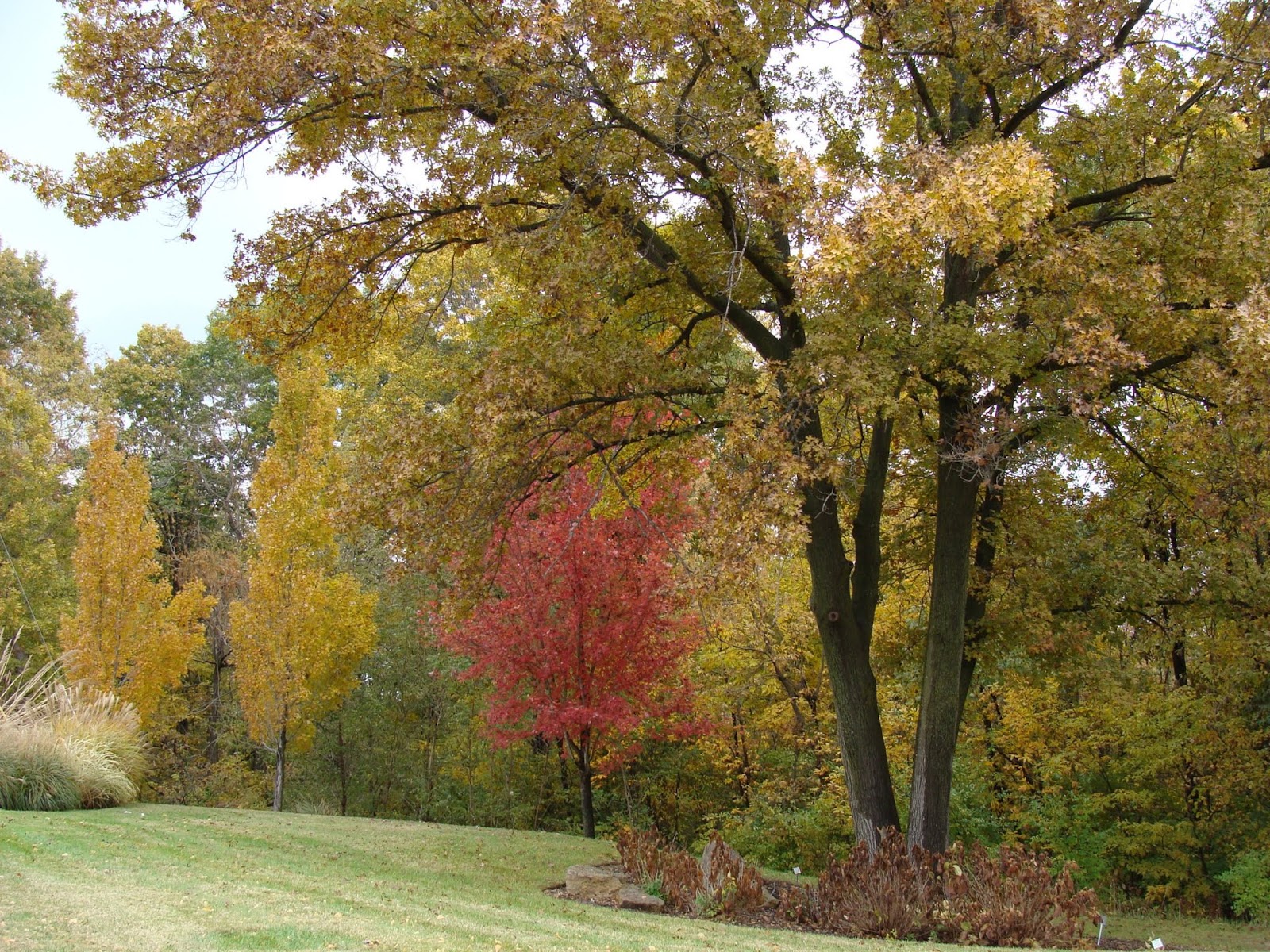
       When fall arrives, I want to see bright oranges, vibrant yellows, and fiery reds.  These fall colors bring life back to our landscapes after the summer sun has faded most of the blooms.  The natural turning of leaves into their disguised color of glory brings a new energy to our yards and awakens our senses.  Right now, you can find selections of trees and shrubs especially bred for fall color.  There is no reason to have hum-drum containers during fall when there are Garden Mums and Fall/Winter Pansies to replace our burnt out summer annuals.  Fall cool crops known as Fall Magic are also great additions to beautiful fall containers.

       Home decorating is great fun also to add pumpkins, corn stalks, gourds and other harvest items to the landscape or porch décor.

       In addition, don’t forget fall bulbs.  Now you will find the best selection, and you have till Christmas to get them into the ground for spring blooming.  Bulbs need 10 weeks of cold weather to create their magnificent spring show.  Many varieties and colors are popping up in this category of plants as well.  I will spend more time on bulbs in October.

THE POST SEASON WRAP UP

One of the best-kept secrets to the most lavish landscapes is autumn restoration.  Just a few garden chores done in the fall will lead to spring and summer pay-offs that are well worth the work.  Things to do now include:

Pull Weeds:  Clean up your yard by pulling weeds.  Then apply a pre-emergent such as Preen containing Trifluran.  This will keep your yard looking nice and weed free for months to come.

Fertilize:  It is important to fertilize your evergreens and conifers at this time because their root systems continue to grow throughout the late fall and even into the winter till ground frost appears.  An application of Osmocote or plants spikes is ideal for this task.  The plants take up these nutrients and are ready to explode when the spring growing season arrives.

Prepare Your Lawn:  Were you disappointed in your lawn this year?  Well, now is the time to prepare your lawn for next spring!  Aerate and thatch it if the soil is compacted.  This will allow the soil to drain better and give it much needed oxygen to the roots.  Seeding can be done as well as fertilizing.  Seeding in early fall will give the roots plenty of time to become established before winter.  Fertilize with a winter type fertilizer to build nutrients up in the root system.  This will keep your lawn from going into the winter hungry and it will help it take off much faster next spring.


Enjoy the cool crisp air and I’ll………..see you in the Garden

Sandi Hillermann McDonald