6/5/13

Garden Solutions - June 2013

            Although I’ve never been accused of being short on words, there is often this blank in my mind about where to start the article. This month I will begin with a reminder that June is National Perennial Gardening Month. Perennials are herbaceous plants that die back to the ground in the winter but return year after year to dazzle us with color.

Solomon's Seal Plant
            Past and present Perennials of the Year (these are proven performance perennials that have been named since 1991) are usually great choices for anyone’s garden, as they are tried and true varieties. The 2013 Perennial Plant of the Year is Polygonatum odoratum ‘Variegatum,’ commonly known as variegated Solomon’s Seal or striped Solomon’s Seal. This all-season perennial has greenish-white flowers in late spring and variegated foliage throughout the growing season. The foliage turns yellow in the fall and grows well in moist soil in partial to full shade. We are in planting zone 6, so it is always important to check that bit of information on all plants you plan to leave in the garden from year to year as well. Check the Perennial Plant Association website at http://www.perennialplant.org/ for perennial plants of the year since 1991 plus gardening tips.

Here are 10 quick tips to Fabulous Perennials:

1.      Begin by preparing the soil
2.      Choose plants carefully, sun vs. shade, etc.
3.      Purchase plants that can establish in one season.
4.      Space perennials to give them room to grow.
5.      Fertilize
6.      Mulch
7.      Control weeds
8.      Control insects
9.      Additionally, clean up the beds each season.  Enjoy!!

            Well, June is also the month of graduations, weddings, vacations, Father’s Day, and the beginning of summer. This is the month that we all begin to spend more of our free time out of doors, enjoying our gardens and the fruits of our labors from the last 3 months, (plus). If all of you have kept up with your tasks, then this month should be easy. However, if you are like me, June will be a month you can get caught up.

            The first task that we need to do this month is to get the spring flowering trees and shrubs trimmed. Flowering crabapples, serviceberry, dogwoods, magnolias, lilacs and viburnums all set their buds for next years’ flower on the new growth they develop this year. These plants should be pruned now to encourage new growth and therefore flower buds for next year. It is recommended that you complete the pruning of these plants by early this month.

Here are other garden tips for June:
 
·         Watch for the outbreak of bagworms on garden plants, especially junipers. Then spray affected plants with Permethrin sold under the label ‘Eight’.

·         Deadhead bulbs and spring perennials as blossoms fade.

·         Repeat plantings of corn and beans to extend the harvest season.

·         Fertilize Zoysia grass now while it is actively growing.

·         Renovate strawberries after harvest. plow the rows; thin out excess plants; remove weeds; fertilize and apply mulch for weed control.

·         Spray roses with a fungicide to prevent black spot disease and fertilize monthly.

·         Continue pinching back your garden mums till July 4th to promote full, bushy growth and good fall color.

·         Water turf as needed to prevent drought stress, and watch for fungus problems.

·         Mow lawns frequently enough to remove no more than one-third the total height per mowing.

·         Continue enjoying the antics of the wildlife in your yard and gardens by continuing to supply food and water sources for them.

·         Change hummingbird nectar at least weekly to prevent fungus from growing.  You can make your own nectar using 1 part sugar to 4 parts water---no food coloring please!

·         Move houseplants outside for the summer.  Place plants in areas with dappled shade and some protection from hot summer winds.

·         Rejuvenate your older lilacs by cutting back to one third of the largest branches. This will create a fuller, more lush specimen.

·         Orioles (if you were lucky enough to keep them around) begin building a gray woven nest; this takes about a week.

·         Watch for birds carrying food to their young.

·         Gray squirrels begin a second breeding.

            Are you late getting planting started in your garden this year? YOU ARE NOT ALONE! As busy as we were this May, and as wet as the weather was, many people have commented that they haven’t even begun their planting. That’s okay - you still have plenty of time. Plant selections should still be pretty strong at independent garden centers. Fully enjoy your garden; it is the only true place to connect you to Mother Nature.

See you in the Garden……………..
Sandi Hillermann McDonald


5/3/13

Garden Solutions - May 2013

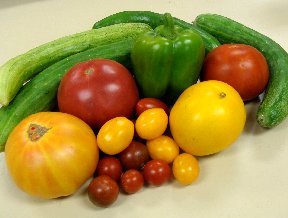
Fresh garden vegetables
           Gardeners, start your containers!! Spring has sprung! The weather is beginning to turn warmer and the sun is beginning to hang around a little more each day. Now is the time to plant warm season annuals and vegetables. I want to focus on veggie garden containers this month.     Even small space gardeners can grow enough nutritious produce to prepare a few meals, supplement your diet, and save some bucks. With a little planning and attention, container gardens can produce like mini farms.

            Almost any vessel can be used as a container, but it must have drainage holes that allow water to freely flow through the pot. Most veggies only need 8” of soil depth. Trays and smaller containers work fine for lettuce, radishes, spinach, and peppers. Root crops like carrots and onions, and large plants like most tomatoes and squash, require containers larger than 16 inches in diameter. Generally as a rule, bigger is better for root growth and overall vigor.

            When growing veggies in containers, packaged potting mixes are typically the best choice to use for a planting medium. Using garden soil in containers is never ideal. Packaged potting mixes are lightweight, moisture retentive, and well aerated. In addition, they do not harbor any fungi, bacteria, insects, or weed seeds that would cause problems later.


Tomato plants in containers
            Sunlight, not space, is probably the biggest limiting factor in urban environments. Without at least six hours of sun a day, it will be tough to grow quality vegetables. Crops need a lot of solar energy to make nutritious fruits, seeds, and leaves. Southern exposure is best, but six hours from any direction should be sufficient. To avoid leaning or uneven ground, rotate the containers weekly. Use wire cages or other sturdy supports to protect large plants like tomatoes, beans, peas, and squash.

            Regular watering is crucial when you grow in containers because there is a limited soil mass for storing water. During the peak of summer heat, gardeners may need to water daily to keep plants growing at full potential. A drip irrigation system allows you to water automatically, and with a timer, you can even water containers while you’re away. However, the best option for vacation watering is always a reliable neighbor. Vegetables grown in containers also need regular fertilizing.  Follow the label instructions, and make sure the container is well drained or plants may suffer from high salt levels due to fertilizer buildup. Some gardeners combine the two tasks and simply water with a quarter-length fertilizer solution once a week.

            If plants don’t appear vigorous and healthy, check them closely because disease and pest infestations can quickly get out of hand. If caught early, most are easy to treat. Check the undersides of leaves for insects. Many of them can be picked off or sprayed with a strong stream of water. Some pests require other treatments. Natural insecticides are very popular with home gardeners. Always read insecticide labels to make sure the product is compatible with food crops, and follow the directions carefully.

            When looking for plants, look for vigorous young seedlings with bushy growth. Check to make sure each seedling is securely anchored in the six-pack or pot, which implies a well-established root system. Dip the seedling in a bucket of water to moisten the root ball, tease out any circling roots, and plant it at the same depth it was previously growing. (Tomatoes are an exception to the planting depth rule because they can be planted with the bare stem several inches below the ground, and roots will form along the stem.)

            Some crops like lettuce, beets, and carrots, are best grown from seed. Simply follow the instructions on the packet.  Be sure to thin sprouts to the recommended spacing. Thinning is a ruthless task, but fortunately most veggie sprouts can be used in salads and other dishes for a spring treat.

            If you have space to do a small raised bed garden in place of containers, check out www.squarefootgardening.com for a complete listing and schedule to produce a plentiful harvest for a family of four. Dig in and see how great and beneficial veggie gardening is!


Enjoy the season,

Sandi Hillermann McDonald

4/10/13

Garden Solutions - April 2013

             BREATHE! It is something we all have been doing since the doctor gave us that first slap on the behind the day we were born. It is something we do 24 hours a day every day of our lives, even while we sleep. We don’t even have to think about it. Maybe that is part of our problem. The first thing I do each morning after I shut off the alarm clock is to take 5 long, slow, deep breaths and think about each one. It really refreshes the mind and senses. As the day progresses and things happen that begin to build the stress level, I repeat my morning ritual, and the problems almost solve themselves. What does this have to do with your landscape? What better place to think about and practice breathing then out in your garden. Notice the clean fresh air following a spring thunderstorm, or the fragrance of all the flowers in your landscape. Enjoy relaxing deep breaths after you have finished mowing your lawn. The next time you feel the stress starting to build; somebody just cut you off on your drive to work; the kids are yelling and arguing; the weeds seem to be the only thing growing in your landscape; just breathe. Try it! I’ll bet that it will make you feel better and you will continue it as a habit!

            Now pay attention to the birds singing early in the mornings and their increased activity, which leads way to courting, nesting, and soon to be, new fledglings. Therefore, I encourage you to continue feeding our feathered friends during this important time and enjoy the antics that lie ahead. I would also like to remind you that these little birds do eat many insects, which is a great benefit for your yard and garden. You should already have your purple martin houses up and filled, and now it is time to hang up the hummingbird feeders. You can make your own nectar using four parts water to 1 part sugar (1/4 cup sugar to 1 cup water). You can start with slightly more sugar in the mix to attract the hummingbirds, and then go back to the 4 to 1 mixture once the hummingbirds are frequenting your feeders. Boil together the mixture to dissolve the sugar, fill your feeders and enjoy. Change out the liquid frequently as hummingbirds are very fragile and our summer heat can quickly ferment the sugar mixture. Clean the feeder in between each filling.

            The lengthening of daylight also seems to brighten peoples’ spirits and relieve some stress as we can now move outdoors and enjoy what Mother Nature has to offer. So, I invite you to go outside and “dig in.” Here are tips to help you get started:

·         Remove winter mulch from your rose bushes. Trim out dead and diseased canes. Cut all other green wood to about 18” above the ground.
·         When Crabapples are in bloom, hardy annuals can be planted.
·         Transplant trees, shrubs, and perennials early in the month for best results. This includes moving plants you already have established in your yard that need to be moved to a new location.
·         Spots and bare patches in the lawn can still be over seeded if you did not apply a Crabgrass Preventer. During spring there are more issues to be aware of when seeding a lawn rather than in the fall. Talk to a professional about seed choices and proper procedures.
·         Liquid weed control should be applied early this month to control dandelions, henbit, and other broadleaf weeds. New grass in recently seeded areas MUST have grown enough to be mowed three times before it is strong enough to be treated with weed chemicals.
·         Prune spring flowering shrubs after they finish blooming.
·         Asparagus and rhubarb harvests begin. Keep your hoe sharp!
·         Start cucumber, squash, cantaloupe and watermelon seeds indoors this month for late May/early June planting outside.
·         Shrubs such as Crepe Myrtle, Butterfly Bush, and Hardy Hibiscus can be pruned back to green wood this month. REMINDER - these plants leaf out very late (early May) and should not be considered dead, or be replaced until after Mother’s Day.
·         Termites begin swarming. Termites can be distinguished from ants by their thick waists and straight antennae. Ants have slender waists and elbowed antennae.
·         Apply Fertilome Systemic Insect Control this month to control borers in shade trees and shrubs.
·         Remove old tree wraps from trees planted last fall so they do not create a place for insects to harbor.
·         Mole young are born in chambers deep underground.  Start trapping today!
·         Protect bees and other pollinating insects. Do not spray insecticides on fruit trees that are in bloom. Bees are in danger and it is very important to be careful around them. In fact, check out nature friendly products readily available in garden centers when needing to do insect treatments.
·         Water gardens may be cleaned out and the water changed. Do not scrub the walls since this will remove accumulated beneficial bacteria. Begin adding additional bacteria and barley bales now to begin the natural cycle of pond clean-up. Have questions, call a professional for assistance.
·         The last week of April is a good time to try an early sowing of warm season crops such as green beans, sweet corn, etc. Transplants of tomatoes, eggplants, peppers, and sweet potatoes can also begin to be planted outdoors now.
·         Container gardening is a good choice for flower and vegetable gardening if space is in short supply. It can be done by anyone, anywhere, check it out!!
·         “Natural Gardening” is a wave of the future… keep your family safe and check out what organic/natural options are available to you when gardening this year. There are many.

Well, time is running short with much to do…see you in the garden

Sandi Hillermann McDonald

3/2/13

Garden Solutions - March 2013


Pansy bloom with intense color - Beautiful!            Spring is almost here!!! What a wonderful feeling to be able to spend more time outside enjoying what Mother Nature is unfolding before our eyes. The lengthening of days is a welcome site, and the warm sun on our faces is also a very great feeling. We “spring forward” with Daylight Savings Time on Sunday, March 10 this year. That in itself is exciting.

            The grass will be greening up and mowing time is just around the corner. Mow lawns now to remove old growth and the last of winter’s leaves before new growth begins. Thin spots and bare patches in the lawn can be over seeded now if you don’t intend to use a crabgrass preventer on your lawn. Last summer’s heat and drought may make this a necessity this spring, if you missed the opportunity last fall.

            If you don’t over seed your lawn, now is the time to apply Fertilome Crabgrass Plus Lawn Food. We have long summer seasons here, and actually recommend that you make two applications of this product (4-6 weeks apart) to keep your yards crabgrass free this summer. 

            Begin spring cleanup of perennial beds this month. Cut perennials to 3” above the ground.  Remove damaged foliage and old flower stalks. Ornamental grasses and hardy hibiscus can be pruned back to 6” above the ground now.

Mulch being added to a landscape bed
            Once flowerbeds have been cleaned up, re-mulching can be done.  Be sure not to mulch on the crowns of plants.  Top dress or dry feed beds with a granular fertilizer, such as Osmocote, and apply a pre-emergent if you do not plan to plant any flower seeds.   Pre-emergent products will put down a barrier over your flower beds that keep weed seeds from germinating, making weeding an easier job this summer. Divide summer and fall blooming perennials now, along with ornamental grasses if you so desire.

            Plant/sow peas, lettuce, radish, kohlrabi, collards, turnips, potatoes, spinach, onion sets, beets, carrots, and parsley outside this month.  Set out broccoli, cabbage, Brussels sprouts, Chinese cabbage, cauliflower and pansy transplants now.  This month is also great for setting out strawberries, blueberries, blackberries, grapes and fruit trees.

            Start seeds indoors this month for tomatoes, peppers and eggplants.  And houseplants can still be repotted.  Continue to check houseplants for over wintering insect populations.

            Nesting boxes for bluebirds can be set up as well as Purple Martin houses.  Purple Martins return to our zone 6 region between St. Pat’s Day and the end of the month.  So, now is the time to clean out those houses and be prepared.

            It is time to go, so we will “See you in the garden!!”
Sandi Hillermann McDonald


2/7/13

Garden Solutions - February 2013

 
You would think that we gardeners would spend the winter months curled up by the fire, perusing seed and bulb catalogs and daydreaming about our gardens in the warmer months ahead. That is well and good from about Christmas to mid-January and then we start to get the itch – you know the one – our fingernails are just to clean and it’s time to get our hands in the soil. A great way to satisfy your green thumb during the winter is to tackle a classic indoor gardening project. Mini gardens have become all the rage. They can be open topped terrariums, saucer planters or low dish gardens. The imagination can run wild with ideas to make it a “playful” space. My granddaughter loves to play with my gardens by moving in dinosaurs or fairies and playing “Princess Stories”. This is great way to get the children interested in plants.

It is also time to think about starting any garden and flower seeds in the house that you may want to grow this year. The choices are many. Our last frost date is around May 1st, so back up the weeks on the calendar for seed starting so you know when the best time for planting in the house would be. Ample light is very important for this task. Seed varieties can be found in many forms also. Besides the tried and true varieties grown for years, heirlooms and organic seeds are now readily available. Botanical Interest is a wonderful line of garden seeds that offers health and recipe information on the packets. They are great for the beginner gardener.
 
Now going beyond the garden, from dinner on a city rooftop garden to watching football in suburban outdoor living rooms, we Americans have once again fallen in love with the great outdoors. Outdoor living is more than dressing up patios with a few containers. People are transforming their ordinary backyards into “specialty rooms” complete with kitchens, bars, televisions and even heaters for cool nights. Flowers, trees and shrubs are being used as accents, room dividers, carpets and curtains. As we go outdoors more often with our families, friends and pets, it is only natural to think more consciously about how safe our own backyards are, giving way to the new twist in outdoor living: the “eco-chic” movement. Environmentalism is on the upswing and is changing everything from the types of cars we drive to the food we eat and even the way we garden.


And last but not least, February is National Bird Feeding Month. So if you have not enjoyed this hobby before, it is not too late to start. Bird feeding is an entertaining and educational pastime that can be enjoyed by everyone. You can invite the kind of birds you want to your yard by choosing the right feeder and food they prefer to eat. They are many bird behaviors and seed preferences. The “sit and eat” birds stay at the feeder while they eat. Goldfinches and Siskins prefer Nyjer seed offered in tube feeders, and Cardinals and Grosbeaks prefer black oil sunflower seeds form a hopper, or platform type feeder. The “grab and go” birds include chickadees, Titmice, Nuthatches and Woodpeckers. They take a seed and eat it somewhere else. They prefer black oil sunflower and peanuts out of the shell or split. These bird types come to tube, hopper or platform type feeders. The “floor feeder” birds are the ground feeding birds that may also eat on an elevated feeder. Juncos, Sparrows, Towhees, and Doves are in the group.

There is a coming event to be held in Washington that will offer great information on wild birds in our area. Interested in naming all of the beautiful birds that visit your backyard, and attracting more? Your invited to “Life in the Landscape,” A Winter Bird Workshop, on Tuesday, February 26th at Hillermann Nursery & Florist. A Seminar and Question & Answer Session will be held from 2:00 - 3:00 p.m., and a “Birds in the Hand” Banding Demonstration will be held from 3:00 - 4:30 p.m. The Missouri River Bird Observatory will teach you how to identify birds, the species you are most likely to see during Missouri's winter, and how to make the birds at home in your yard via bird-feeders and landscaping. A one-hour seminar will be followed by a bird-banding demonstration where you will get to see birds up close and personal! Likely catches include cardinals, woodpeckers, and chickadees. Learn more about the Missouri River Bird Observatory online at http://www.mrbo.org/.

Until next month,
Sandi Hillermann McDonald